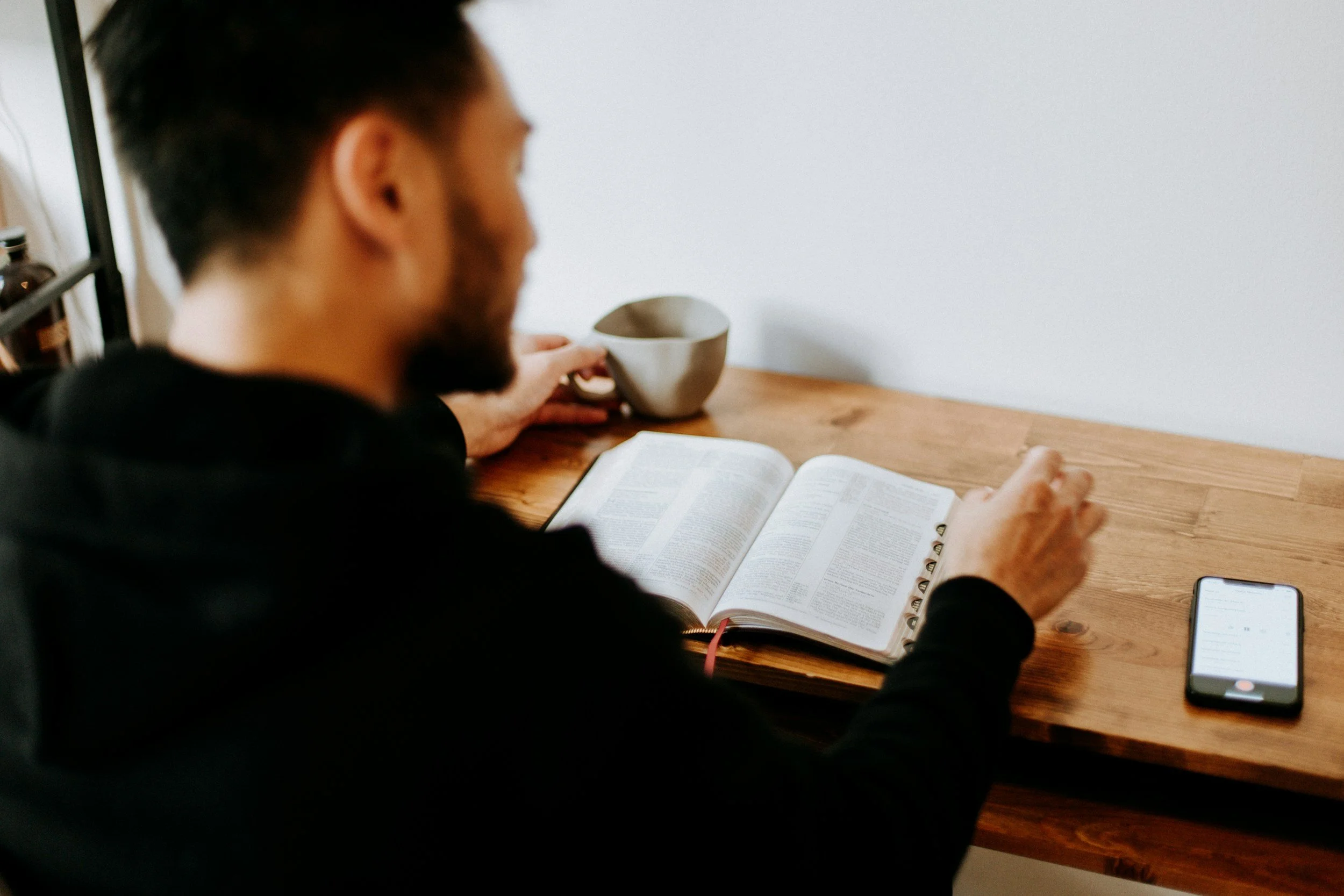
“For the word of God is living and powerful, and sharper than any two-edged sword, piercing even to the division of soul and spirit, and of joints and marrow, and is a discerner of the thoughts and intents of the heart.” Hebrews 4:12 (NKJV)
We have a living Word because we belong to a living God. A baby macaque monkey named Punch recently captured global attention. At just seven months old in a zoo outside Tokyo, Punch was abandoned by his mother and rejected by his troop, leaving him alone and without a community. In response, zookeepers improvised by giving him a stuffed orangutan toy. The images went viral online, but beneath the tender moment lies a more enduring truth: while the toy could provide comfort, it could never teach Punch how to live. Although we may not be clinging to a lifeless toy orangutan, like Punch, we are all holding onto something. The question is, are we holding onto what gives us life or that which robs us of it?
In the book of Hebrews, the apostle Paul calls us to hold onto the living word of God. For Paul, Scripture was not a collection of dead verses but living words that offer hope in the darkness and guidance in the confusion. More specifically, the early church knew then what is still so miraculously true today: the word of God has the power to bring new life by being born again. 1 Peter 1:23 (NLT) reminds us, “For you have been born again, but not to a life that will quickly end. Your new life will last forever because it comes from the eternal, living word of God.” Put simply, the word is living because Jesus lives, and because He lives, He also promises to live in us.
One of the most powerful ways to let go of lifeless things is through consistent engagement with Scripture. The largest study ever conducted on Bible engagement by the Institute for Biblical Research found an incredible threshold effect. Reading theBible one day a week had little to no impact. Two or three days? Still not much. But something transformative happens when a person crosses the threshold to reading Scripture four or more days per week.
The results were striking. People who read the Bible four or more days a week were …
228 percent more likely to share their faith,
407 percent more likely to memorize Scripture,
59 percent less likely to view pornography, and
30 percent less likely to struggle with loneliness, depression, or anxiety.
That is the miracle of Scripture, it has the power to not simply inform us but transform us, giving life where there was emptiness, loneliness, and the absence of meaning. Ellen White writes, “As our physical life is sustained by food, so our spiritual life is sustained by the Word of God.”[1] May the written Word draw you closer to theliving Word today!
REFLECTION
What “lifeless things” (habits, distractions, relationships, mindsets) might I be holding onto for comfort instead of God?
In what ways have I experienced “new life” through God’s Word?
What is one specific step I can take this week to engage more deeply with Scripture?
Who can I invite to keep me accountable in consistently engaging Scripture?
[1] Ellen Gould White, In Heavenly Places (Review and Herald Publishing Association, 1967), 134.